
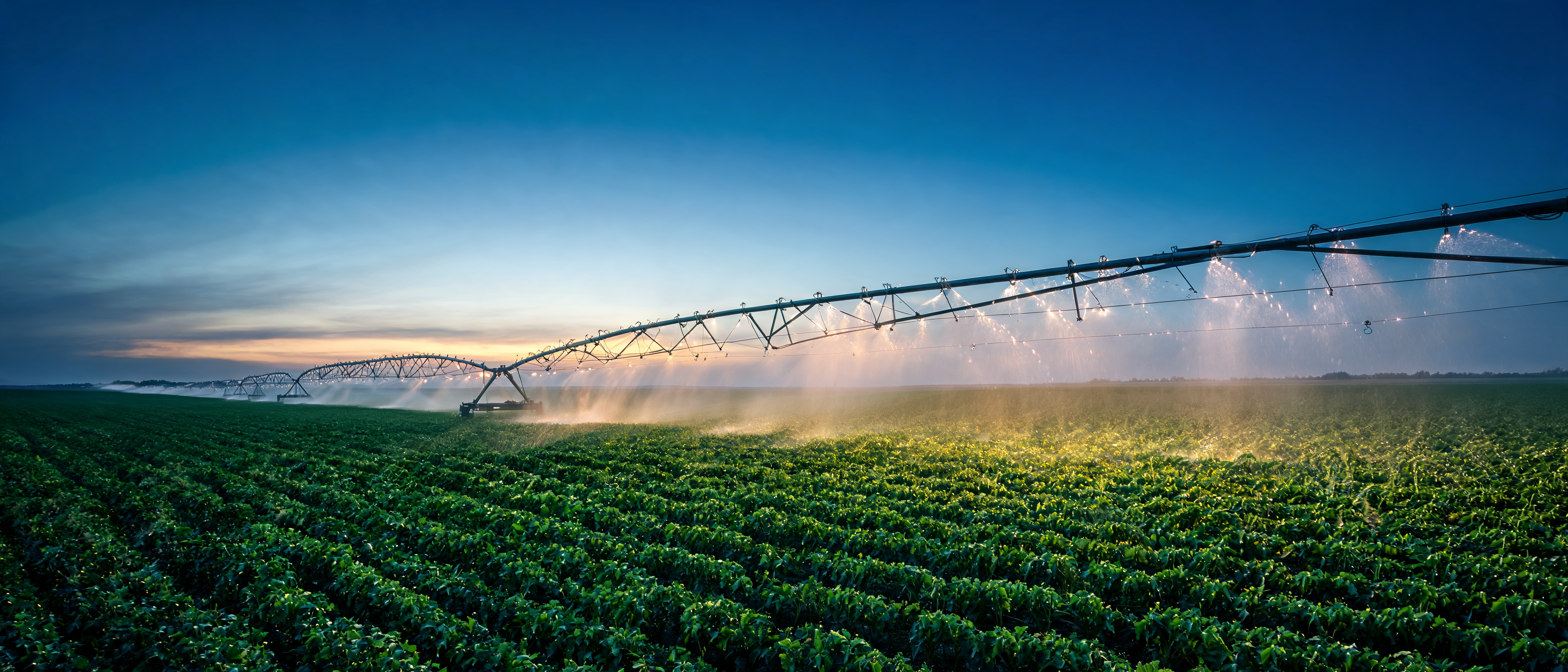
Marri Park Golf Course
Twelve months of bore (well) meter data on a Bassendean sand course. Usage fell 30.1% against a three-year average, and the course carried out no returfing for the first time in four years.
Conducted by NewGround Water Services Pty Ltd, which has managed grounds and turf maintenance at Marri Park Golf Course for four years, reporting from the course's own production bore (well) meters.
- LOCATION
- 34 Marri Park Dr, Casuarina, Western Australia (32.2357°S, 115.8615°E)
- PERIOD
- 12 months · July 2025 to June 2026
- EQUIPMENT
- 4 x 4" (100mm) President Water Vortex Generators
On site at Marri Park
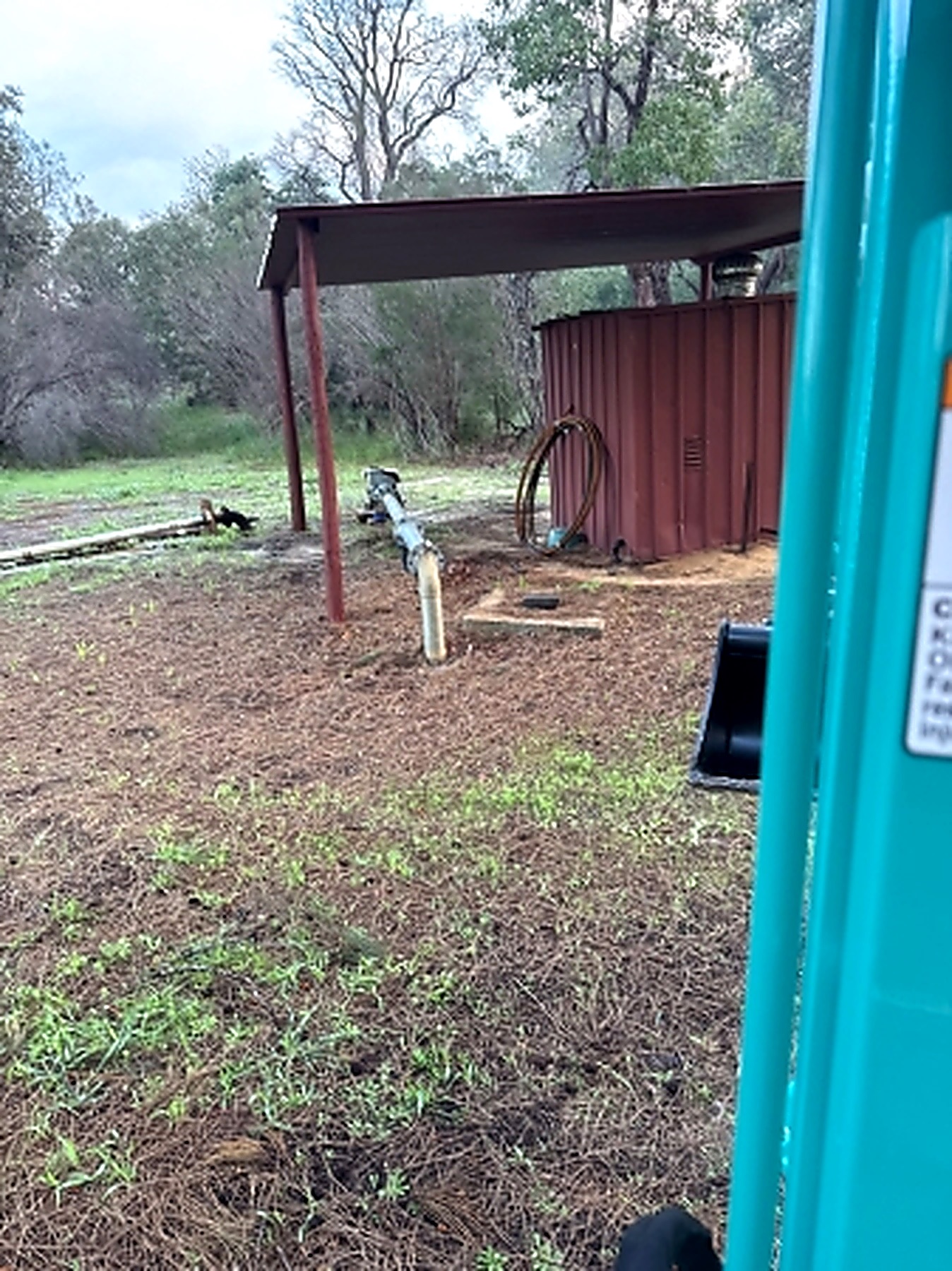
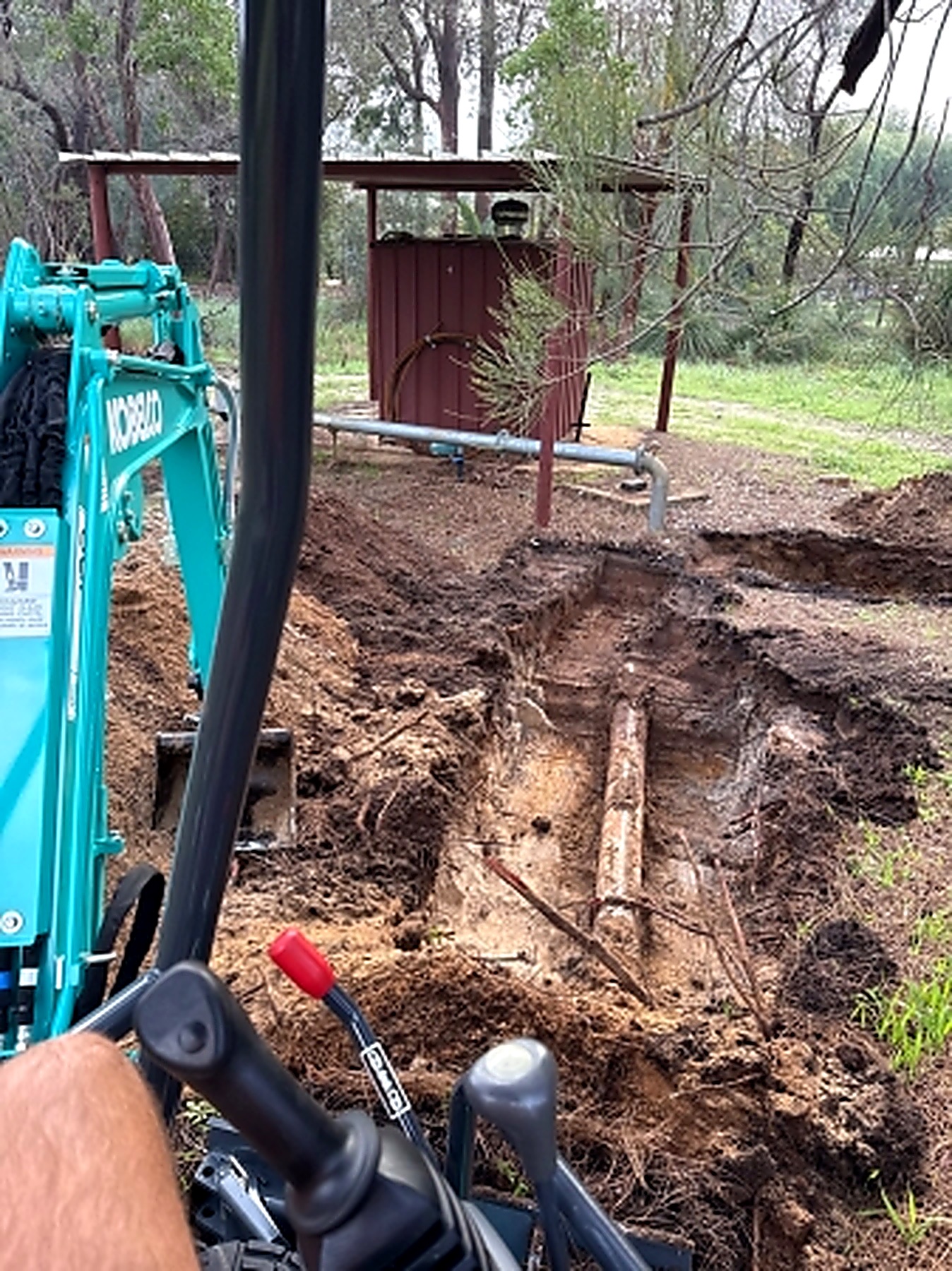
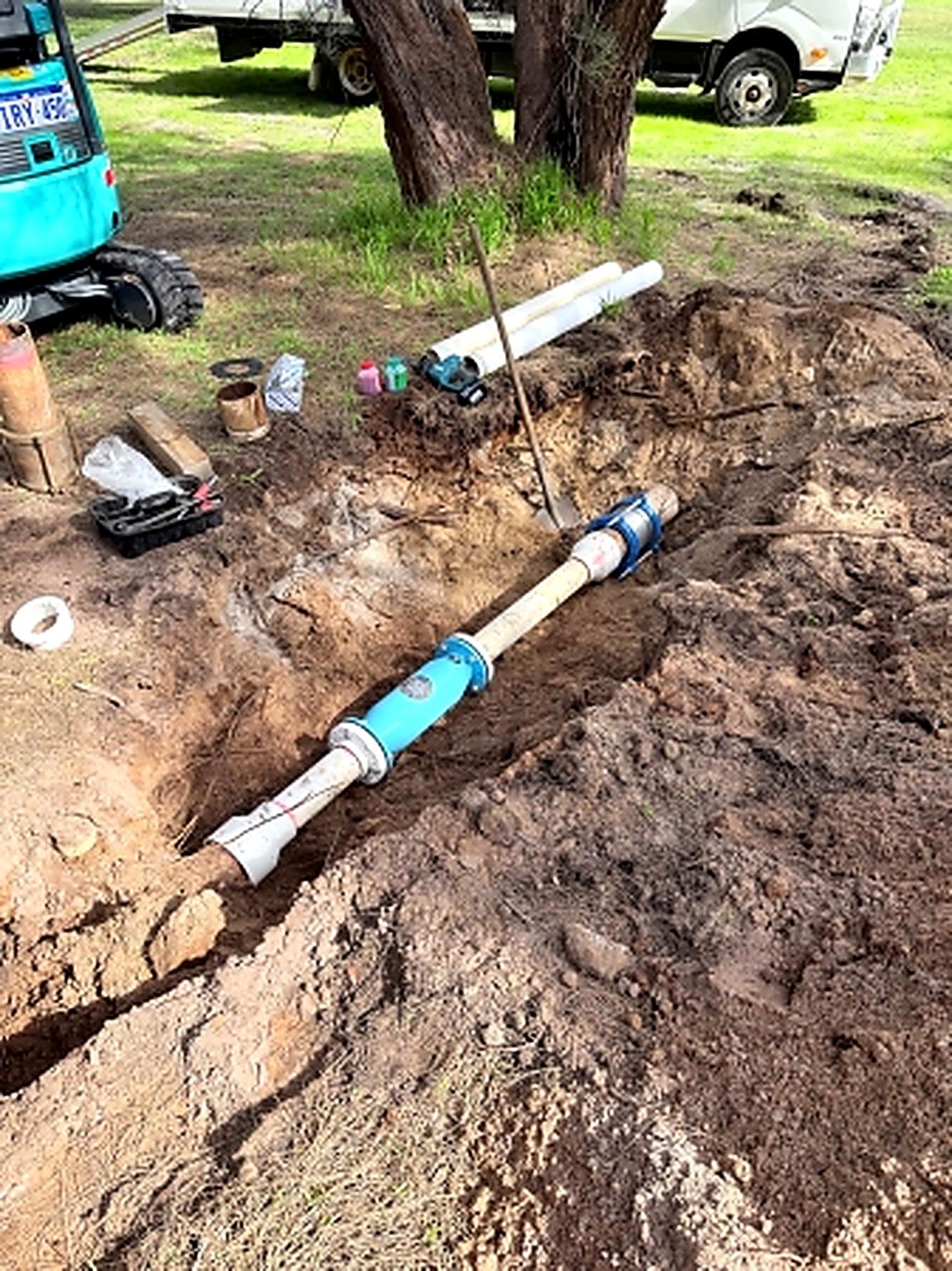
Read the underlying report
Every figure on this page is traceable to the documents below. Nothing is modelled, estimated, or extrapolated.
CITATIONNewGround Water Services Pty Ltd (2026). Marri Park Golf Course: Irrigation and Agronomy Impact Report. Marri Park Golf Course, 34 Marri Park Dr, Casuarina, Western Australia. Trial period July 2025 to June 2026.
What the trial measured
Water use against a three-year baseline
THE STANDOUT RESULT- Trial year bore (well) extraction was 234,018m³ against a prior three-year average of 335,150m³, a 30.1% reduction.
- That is 101,132m³ less water in a single financial year, just over 101 million liters.
- Bore (well) usage fell to 54.2% of the course's 432,000m³ license allocation, down from a three-year average of 77.5%.
- Measured against the immediately preceding season alone (297,978m³), the reduction was 21.5%, on almost exactly the same rainfall (+3.8mm).
- Every figure comes from the course's own production bore (well) meters across bores (wells) 1 to 4, reported month by month in the source document.
Isolating the technology from the weather
- Efficiency was indexed as bore (well) liters pumped per millimeter of natural rainfall at the course's exact coordinates.
- 2024-2025 and 2025-2026 delivered near-identical rainfall, 781.1mm against 784.9mm.
- The index fell from 381,485 to 298,150 liters per millimeter, a 21.8% reduction under effectively the same climatic conditions.
- Earlier years index at 471,570 liters/mm (2022-2023) and 656,552 liters/mm (2023-2024, which the report flags as a dry year anomaly).
- Rainfall data came from the Open-Meteo Historical Weather API, which combines local weather station readings and satellite data for specific GPS coordinates.
Turf health on Bassendean sand
- No returfing was carried out during the trial year, the first time since NewGround commenced the contract four years earlier.
- Marri Park sits on a Bassendean sand profile: fast-draining, highly prone to becoming hydrophobic, and poor at retaining moisture.
- Combatting that profile had historically required aggressive watering regimes and regular returfing to repair dry patches and turf fatigue.
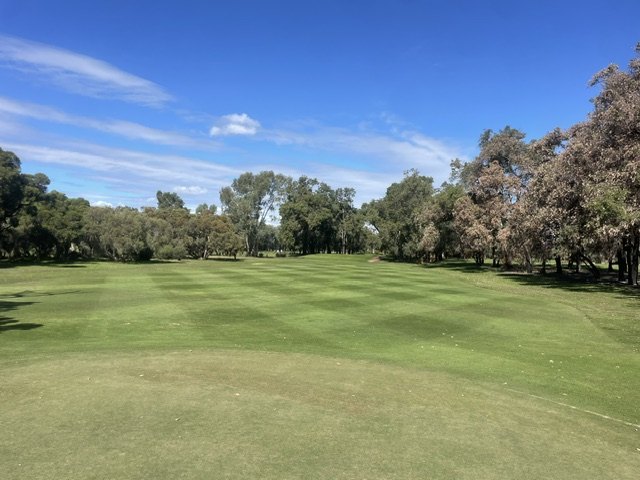
- The 16th fairway, previously scarred with brown patching from poor sprinkler coverage, closed in over the trial year.
- Proposed mechanism: reduced surface tension improved soil penetration and deep root hydration, overcoming the sand profile's natural hydrophobic tendency.
- Because establishing new turf itself requires intensive high-volume watering, removing that task compounds the volumetric saving.
Operational effects beyond volume
- Pumping over 100,000m³ less water cut pump run times and extraction durations across bores (wells) 1 to 4, reducing kilowatt-hour draw.
- Shorter run times decreased wear on bore (well) pumps, irrigation lines and valving.
- Labor hours fell, driven mainly by the elimination of returfing and fewer manual interventions for spot watering.
- The report states these savings are significant and obvious but does not itemise a dollar figure for any of the three.
“By indexing our water usage against corresponding localised rainfall, the data confirms a pure irrigation efficiency gain of nearly 22%, completely independent of seasonal weather variations.”
This is a working golf course on sand, not a research plot. Bassendean sand is the profile most turf managers in the Perth basin are fighting: it drains fast, it turns hydrophobic, and it punishes you for every millimeter you fail to get into the root zone. If that is your ground, the translation to your own operation is short.
The number that survives scrutiny is not the 30.1%. It is the 21.8%. A course can cut its bore (well) usage in a wet year and prove nothing. So the report indexed every liter pumped against the rain that actually fell on those coordinates, then found two consecutive years with rainfall within four millimeters of each other. Same rain, same course, same crew. Twenty-two percent less water pumped.
The returfing result is the one a superintendent will feel first. Four years of laying new turf every season to patch what the sand killed, then a year of none. Renovation is expensive in material, in labor, and in the high-volume watering it takes to establish. That saving compounds on top of the metered one and sits outside it.
What this trial does not have is a control. There is no untreated nine holes running alongside the treated ones, so the comparison is against the site's own history rather than a side-by-side. The rainfall indexing is a serious attempt to close that gap and it is a good one, but it is not the same thing as a control, and the report was written by the contractor managing the course rather than an independent assessor. Read the meter tables at the back and judge for yourself.
Trial at a glance
- SITE
- 18-hole golf course on a Bassendean sand profile, Casuarina, Western Australia
- MANAGED BY
- NewGround Water Services Pty Ltd, grounds contractor for four years
- TRIAL PERIOD
- 12 months, July 2025 to June 2026, one full irrigation season
- BASELINE
- Aggregated three-year average of 2022-2023, 2023-2024 and 2024-2025 extraction
- MEASUREMENT
- Metered, from production bore (well) meters on bores (wells) 1 to 4, recorded monthly
- LICENSE
- 432,000m³ production bore (well) allocation per financial year
- EQUIPMENT
- Four President Water Vortex Generators, 4 inch / 100mm
- RAINFALL SOURCE
- Open-Meteo Historical Weather API, indexed to 32.2357°S, 115.8615°E
- NORMALIZATION
- Bore (well) liters pumped per millimeter of natural rainfall, calculated per financial year
- AGRONOMIC MEASURE
- Returfing events carried out, against four prior seasons of routine returfing
- PROMPTED BY
- Documented outcomes at City of Armadale's Gwynne Park, Curtin University and other WA facilities
Verified by Sam Butler, Superintendent, Marri Park Golf Course · NewGround Water Services Pty Ltd.
City of Armadale · Gwynne Park
16.13% water reduction
GOLF & SPORTS TURFThe Western Australian Golf Club · Hand Watering Greens Hot Spots Trial
Hand watering cut to once a fortnight
GOLF & SPORTS TURFThe Western Australian Golf Club · Irrigation Upgrade
8" and 10" units, installed May 2026
President Water Company · presidentwater.com · Marri Park Golf Course, 12 months · July 2025 to June 2026