Thomas Joseph Brown · Chronicles of Alkemix (Substack) · 26 September 2026
A field biologist traces a proposed mechanism from vortex-treated water through plant aquaporin channels to measured yield gains, citing the South Regional TAFE tomato trial among others, while flagging what is still unconfirmed in peer-reviewed literature.
Writing on his Substack, Chronicles of Alkemix, field biologist Thomas Joseph Brown proposes a cellular pathway for why vortex-treated irrigation water correlates with higher crop yields, often at lower water volumes.
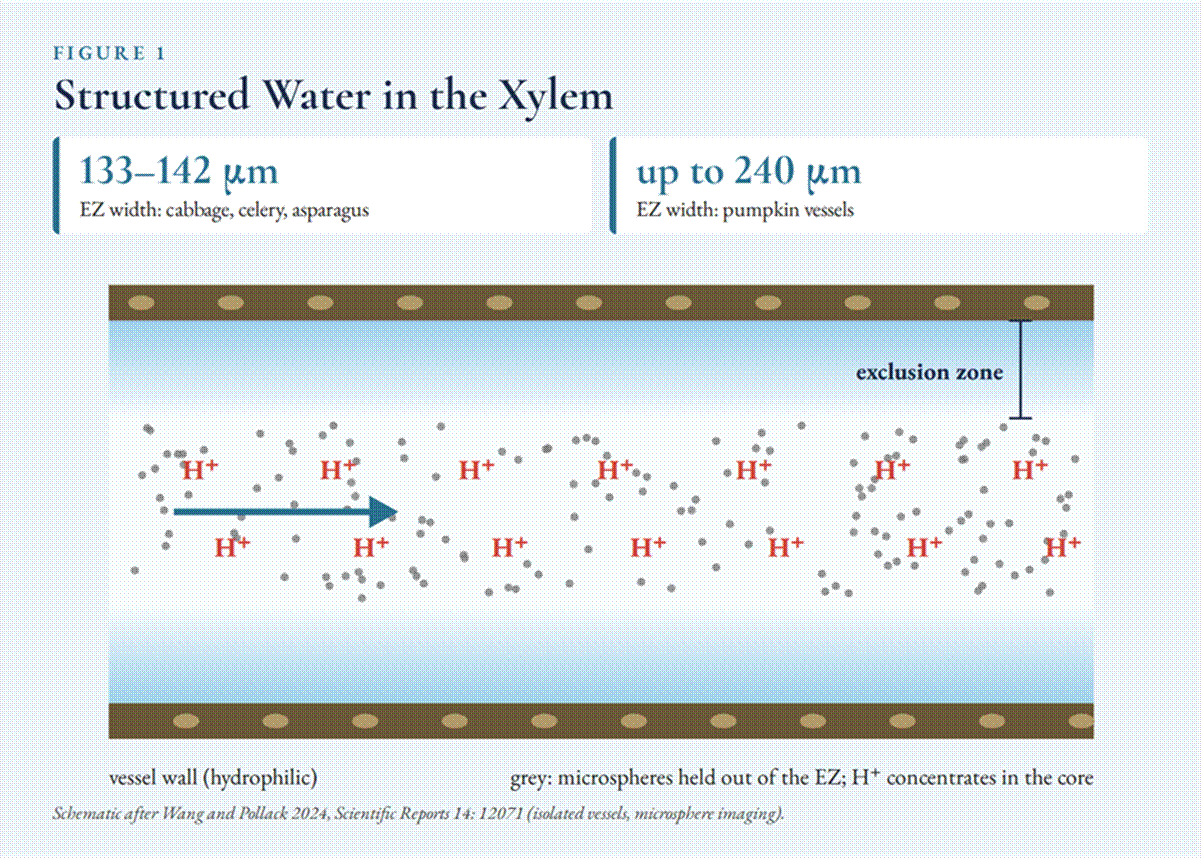
Starts from documented exclusion zones in plant xylem vessels, measured at 133 to 240 micrometers wide in a 2024 study.
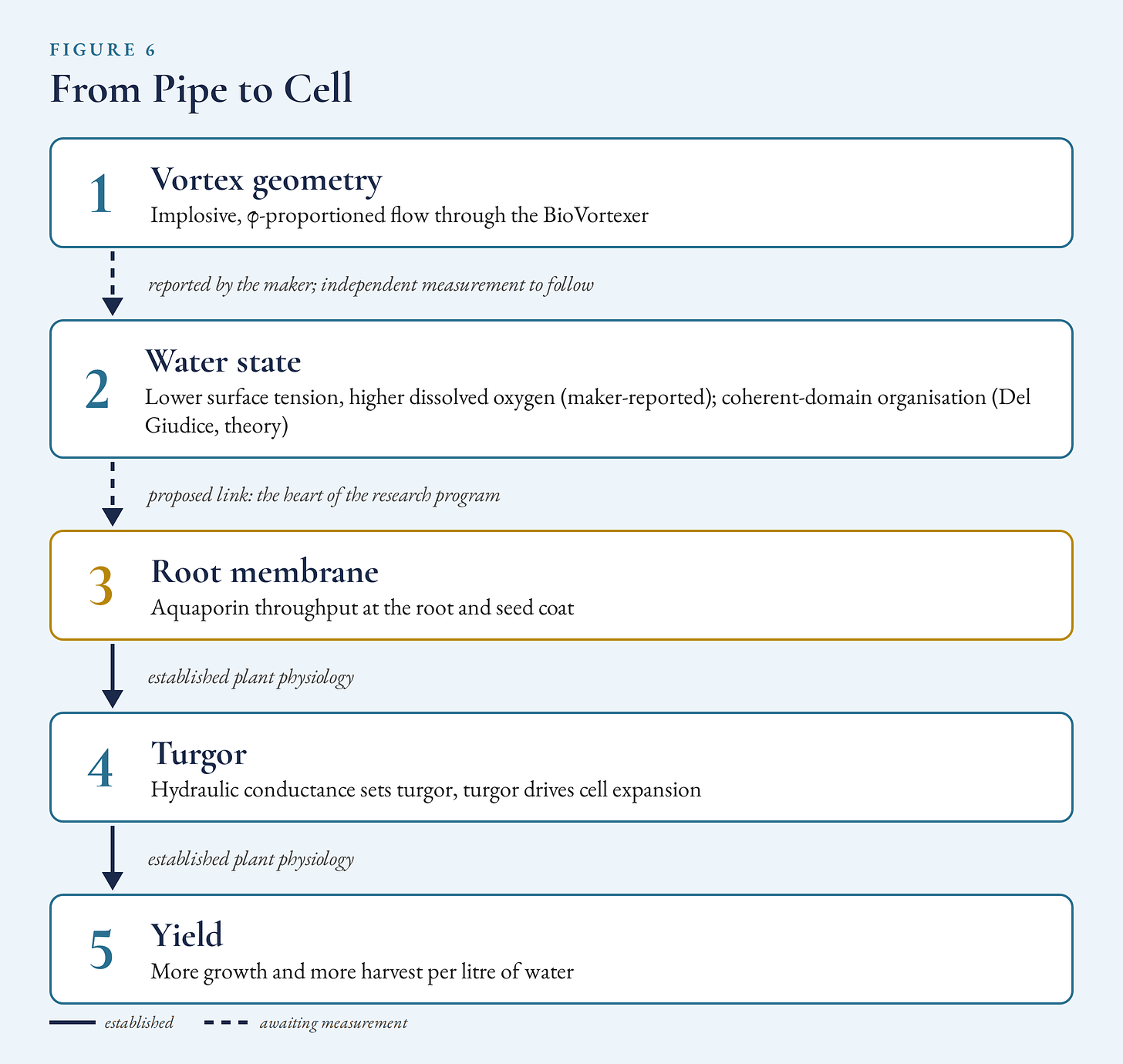
Traces water's path into the plant through aquaporin channels, membrane proteins gated by pH and proton activity, which he proposes respond to the incoming water's electrical properties.
Built his own BioVortexer, a passive vortex-geometry device with bioarchitect Juan Schlosser, based on Viktor Schauberger's observations of natural water movement.
Calls the underlying idea geometric coherence: water carrying a phi-based icosahedral structure that matches plant cellular geometry, lowering the metabolic cost of reorganizing incoming water.
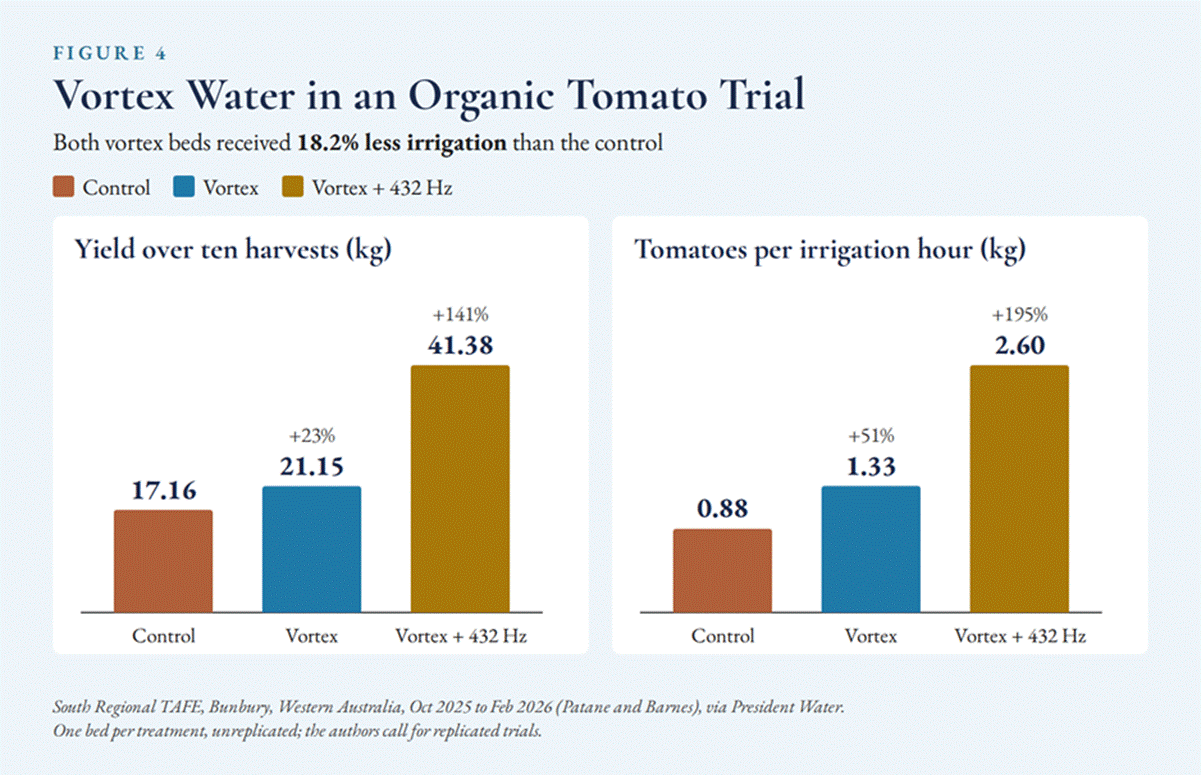
Cites field results: the South Regional TAFE 2025 to 2026 tomato trial (23% yield up, 18.2% less irrigation), Tamil Nadu Agricultural University trials 2013 to 2015 (cotton up 36.6%, tomato up 39.55%), and a Polish Journal study (radish up 18.9%).
Flags the gaps himself: the spectroscopic changes have not been measured in peer-reviewed literature, the water-to-aquaporin link is unconfirmed experimentally, and he calls for independently replicated, controlled trials.
FIGURES FROM THE ORIGINAL PIECE
Figure 1, Structured Water in the Xylem: exclusion-zone water measured 133 to 240 micrometers wide along vessel walls. Schematic after Wang and Pollack 2024, Scientific Reports 14: 12071.
Figure 4, Vortex Water in an Organic Tomato Trial: yield over ten harvests and tomatoes per irrigation hour, control vs vortex vs vortex + 432 Hz. South Regional TAFE, Bunbury WA, Oct 2025 to Feb 2026, via President Water. One bed per treatment, unreplicated; the authors call for replicated trials.
Figure 6, From Pipe to Cell: the proposed causal chain from vortex geometry through water state and root membrane aquaporin throughput to turgor and yield, marking which links are established plant physiology versus awaiting independent measurement.
The trial he cites is the same one covered on our own case study page ↗.
#structured water#aquaporins#field trial#external research
This summary is ours. The full original piece is published by Thomas Joseph Brown on Chronicles of Alkemix (Substack).