

New Age Laboratories · Butter Lettuce Trial
Replicated outdoor trial on butter lettuce. Vortex-irrigated plots took up 97% more manganese and finished the season effectively free of aphids, with no pesticide applied at any point, against controls carrying 500 to 1,000+ aphids per plant.
Conducted by New Age Laboratories and Johnson Ag & Marine Consultants, contracted by Pacific AG, Raymond, Washington.
- LOCATION
- Santa Cruz County, California
- PERIOD
- 55 days · February 5 to April 6, 2021
- EQUIPMENT
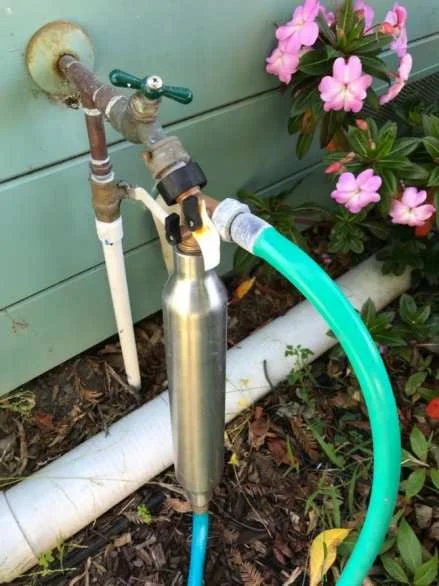
- ¾" (20mm)
From the trial
Read the underlying report
Every figure on this page is traceable to the documents below. Nothing is modelled, estimated, or extrapolated.
CITATIONGarley, J.K. (Principal Investigator) and Johnson, J.E. (2021). Efficacy of Vortex Generator Water Treatment on Butter Lettuce. New Age Laboratories and Johnson Ag & Marine Consultants, Santa Cruz County, California. January 28 to May 15, 2021.
What the trial measured
Aphid resistance
THE STANDOUT RESULT- At harvest, 100% of control plants were infested, scored in the range of 500 to 1,000+ aphids per plant.
- In the vortex-treated plots, fewer than 5 aphids were found, on only 3 of the 30 plants evaluated.
- Chi square analysis of the scored ranges: control plots held significantly more aphids than vortex plots (P < .001).
- No pesticide was applied to either treatment at any point in the trial.
- The two plots sat 20 feet apart, so both faced the same aphid pressure from the same season and the same site.
- Proposed mechanism: higher manganese supports production of secondary metabolites such as phenols, which are associated with natural aphid resistance (Hughes & Williams, 1988).
Manganese uptake and nutrient bioavailability
- Sap manganese in emerging new leaves at 29 days after planting: 23.3ppm (SD 2.9) in vortex plots against 11.8ppm (SD 4.8) in control, a 97% increase (P < .01).
- The gain followed a pre-plant root dip in which the same micronutrient mix was made up in vortex-treated or untreated water.
- Sap chloride ran high in both treatments (2,000 to 3,500ppm), the condition manganese uptake depends on. Only the vortex plants converted it into a manganese advantage.
- Proposed mechanism: vortex flow alters the physical and electrochemical properties of water, increasing ionic permeability and nutrient availability at the root.
- Manganese is a cofactor in enzyme activity, lipid and fatty acid metabolism, and photosynthesis (Marschner, 2002; Marschner, 2012).
Yield and crop quality
- Fresh harvest weight showed no significant difference between treatments (T(29) = 1.05).
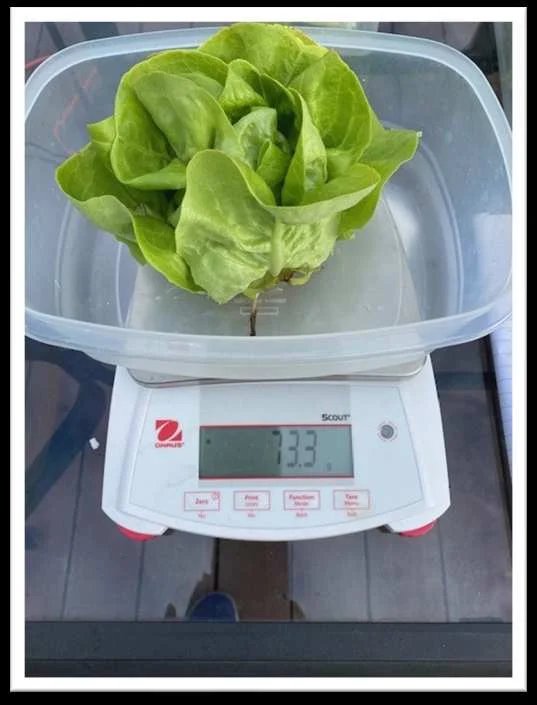
- Control plots averaged 59.3g, 69.9g and 67.1g per plant across three replicates. Vortex plots averaged 67.5g, 65.7g and 72.8g.
- The measurable value sat in nutrient profile and pest pressure, not in raw biomass.
- Sap panels at 36, 44 and 54 days after planting were similar or variable between treatments. Day 29, immediately after the root dip, was the decisive read.
Water source and growing conditions
- Both treatments drew the same Santa Cruz city water from a single hose bib, split by a Y connector and selected with a valve.
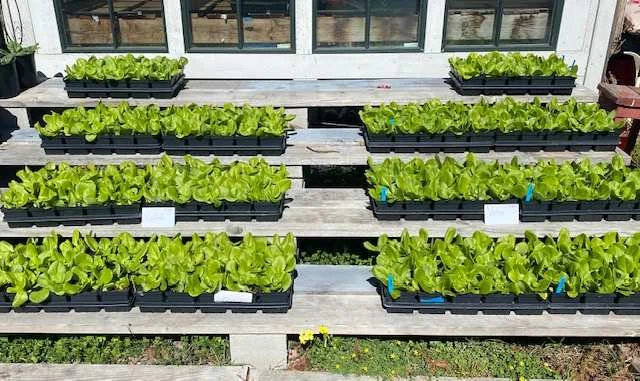
- Outdoor trial. Plants received natural rainfall on top of a pre-plant plug dip and 9 scheduled irrigations, identical for both arms.
- Fertilizer program was identical across treatments: root dip, one foliar application, two soil applications.
- Weather recorded at CIMIS Station 104, De Laveaga-Monterey Bay, approximately 10 miles north of the trial site.
“At harvest, fewer than 5 aphids were found on only 3 vortex-treated lettuce plants, whereas 100% of control plants were infected in the range of 500 to 1,000+ aphids per plant, when trial plots were separated by only 20 feet.”
This trial ran on butter lettuce, outdoors, on ordinary municipal water, with nothing sprayed. If you grow leafy greens, there is very little translation to do between the study and your operation.
The result worth sitting with is the aphid data. Two plots, 20 feet apart, same water source, same fertilizer program, same weather. One finished with every plant infested at 500 aphids and up. On the other, the inspectors found aphids on three plants, fewer than five of them.
The nutrient data points at why. Manganese in the leaf sap ran 97% higher in the vortex plants, and manganese is the cofactor behind the phenol chemistry plants use to defend themselves. The water did not kill the aphids. It appears to have fed the plant well enough to do it.
What the trial does not claim is a yield jump. Head weights came in the same. For a premium leafy operation, where pest pressure and nutrient density set the grade and pesticide use sets the market, that is often the trade worth having.
Trial at a glance
- CROP
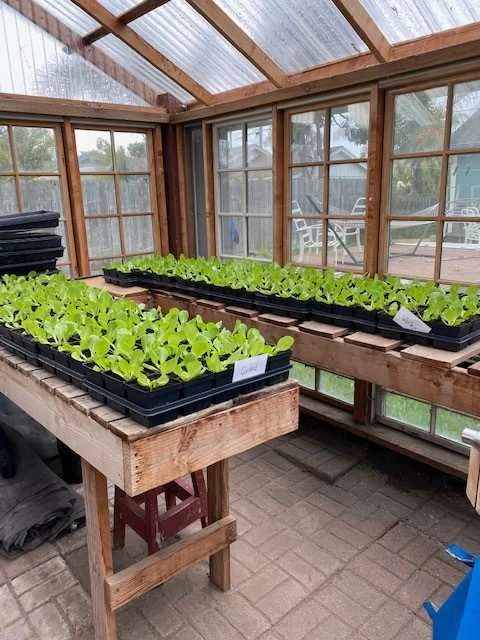
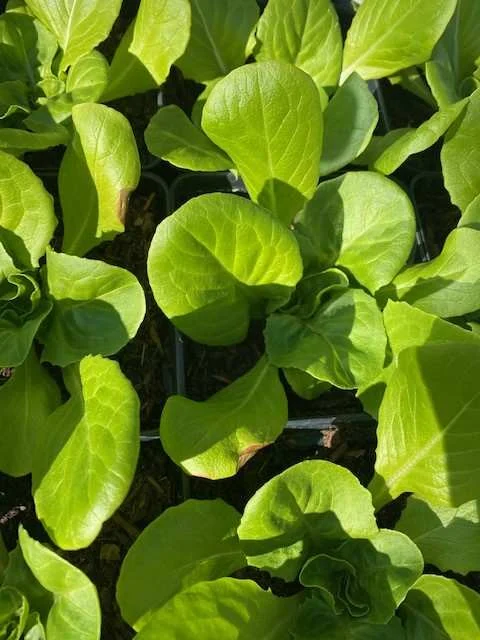
- Butter lettuce, cultivar REX (plug plants, Headstart Wholesale Nurseries, Gilroy CA)
- DESIGN
- Randomised complete block, 3 replicates per treatment, 3 rows of 5 plants per plot
- SEPARATION
- Treated and control plots at least 20 feet apart
- SAMPLE EVALUATED
- 30 plants per treatment at harvest
- EQUIPMENT
- Vortex generator, ¾" / 20mm, 15.5" in length
- IRRIGATION
- Pre-plant plug dip plus 9 scheduled irrigations, identical both arms
- WATER
- Santa Cruz city water, single source, split at the spigot
- SAP ANALYSIS
- New Age Laboratories, Michigan. 24 factors at 29, 36, 44 and 54 days after planting
- PEST SCORING
- Aphid counts 1 March, 16 March and at harvest 5 April 2021
- STATISTICS
- T test on weights and sap, Chi square on scored aphid ranges
- HARVEST
- 54 days after planting, 10 plants from the middle of each replicate plot
Verified by Jenny K. Garley, CSO, New Age Laboratories · Judith E. Johnson, Ph.D., Johnson Ag & Marine Consultants.
President Water Company · presidentwater.com · New Age Laboratories · Butter Lettuce Trial, 55 days · February 5 to April 6, 2021